
Understanding the fiber laser marking machine lifespan is essential for manufacturers relying on precision marking for electronics, automotive, and medical components. Many operators and procurement managers often ask: “How long does a fiber laser marking machine last?”
The answer depends on multiple factors, including the quality of the laser source, environmental conditions, usage intensity, and maintenance practices. Knowing these factors allows operators to plan preventive maintenance, optimize production schedules, and maximize return on investment (ROI).
Short on time? The table below provides a quick overview of what actually determines the lifespan of a fiber laser marking machine—from the laser source to consumable optical components.
| Category | Component / Factor | Typical Expectation | Key Notes (Industry Reality) |
| Core Lifetime | Fiber Laser Source (Q-switched) | 20,000–100,000 hours | Primary factor defining overall machine lifespan |
| Machine Platform | Mechanical structure & enclosure | Long-term use (8–12 years+) | Stable if not mechanically damaged |
| Optical Consumables | Protective window | Consumable / replaceable | Service life depends on dust, fumes, cleaning frequency |
| Optical Components | F-theta lens | Wear-related, replace when degraded | Lifespan varies greatly by application and environment |
| Scanning System | Galvanometer mirrors | Performance-based, not time-based | Replace when accuracy or stability degrades |
| Cooling System | Fans / water cooling parts | Periodic replacement | Preventive maintenance critical |
| Operating Environment | Temperature / dust / humidity | Direct lifespan impact | Poor environment accelerates optical degradation |
| Maintenance Quality | Cleaning, inspection, calibration | Lifespan multiplier | Good maintenance significantly extends service life |
Fiber Laser Source vs. Complete Machine
A fiber laser marking machine is composed of the laser source and various auxiliary components, including galvanometers, F-theta lenses, protective windows, cooling systems, and control electronics.
High-quality Q-switched fiber lasers, such as those from Raycus or IPG, typically have a rated lifetime of 20,000–100,000 hours, depending on usage conditions. The entire machine, including optics, mechanical, and electronic parts, generally lasts 8–12 years when properly maintained.
Low-power machines (10–30 W) tend to reach the upper limit of lifespan under continuous operation. High-power machines (50–100 W) require strict thermal management to achieve their full expected service life. Operating beyond recommended power settings or continuous full-load operation can shorten the fiber laser longevity.
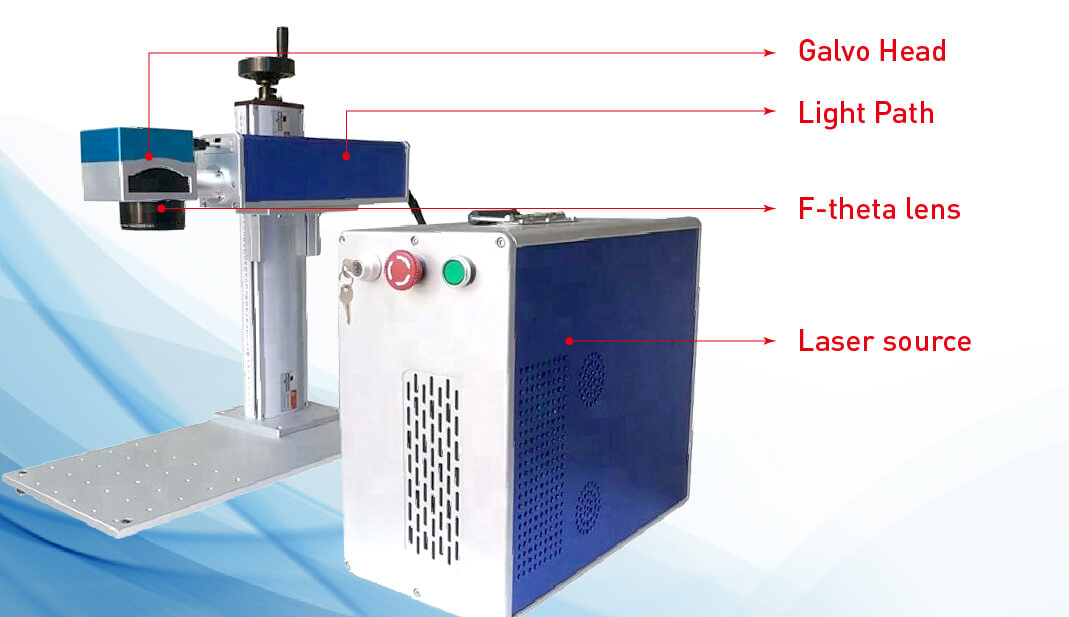
Factors Affecting Fiber Laser Marking Machine Lifespan
Operating Environment
Environmental conditions play a significant role. Maintain a stable temperature between 15–30°C, relative humidity below 70%, and minimize exposure to dust or metallic contaminants. Proper environmental control protects both optics and electronics, directly influencing laser marking machine service life.
Maintenance Practices
Regular fiber laser maintenance is crucial. This includes cleaning F-theta lenses and protective windows, inspecting cooling systems, flushing water cooling when applicable, and securing electrical connections. Frequent software backups ensure project parameters remain intact and prevent operational errors.
Load and Usage Patterns
Avoid continuous full-power operation unless necessary. Frequent on/off cycles stress electronic components, and for batch production, stagger usage to reduce thermal stress. These steps help maximize how long a fiber laser marking machine lasts.
Electrical Stability
Voltage fluctuations and power surges can damage sensitive components. Using a UPS or voltage stabilizer ensures reliable operation and contributes to longer machine lifespan.
Signs of Reduced Lifespan
Early detection can prevent unexpected downtime. Watch for:
• Reduced marking depth or contrast
• Increased system alarms or errors
• Localized overheating of the laser head or optics
• Inconsistent marking quality across materials
Timely maintenance can significantly extend the effective fiber laser marking machine lifespan.
Best Practices to Maximize Lifespan
• Follow daily, weekly, and monthly maintenance checklists
• Maintain a clean, temperature-stable, and low-humidity environment
• Operate within recommended power limits and avoid prolonged full-load operation
• Schedule periodic inspections and calibration by certified technicians
These practices preserve fiber laser longevity and ensure consistent marking quality over the years.
Conclusion
The fiber laser marking machine lifespan depends on laser quality, operating environment, usage intensity, and maintenance discipline. With proper care, high-quality machines can reliably operate for 8–12 years, while the laser source itself may reach 20,000–100,000 hours of service. Preventive maintenance, controlled operating conditions, and professional support are key to achieving maximum lifespan and consistent performance.